Effortless

This week has been A Week. I started off by a visit to my new Primary Care Physician, hoping that he would be a little more proactive than my old doc. He was, to my thinking, sorta mid. I got a bit of a scolding for taking as many nutritional supplements I do, as well as a mini-lecture on Doing It All Wrong when it came to caring for the long-term headache I’ve had since 2020. He then sent me off for lab work, where I caught the Rookie Phlebotomist who could not fine a good spot to draw blood, this from me, a critter with very pale skin and ultra-prominent veins and arteries. Tuesday was spent dawdling while a tech installed the very costly new transmission for our washing machine, and Wednesday we discovered we had a mouse in the house. No sooner had I noted to the Missus that I was pretty close to my stress limit than she was obliged to tell me that our dryer had apparently conked out.

Thanks to a lifetime of practice I could spend all day kvetching about it; I built those muscles long ago. But one lesson I’m trying to teach myself is that optimism, as a habit of mind, is really effortful. No one told me how much energy is required to look at things rightly.

Let’s take Mr. Mouse as an example. When we learned about him on Wednesday night, I was instantly down in the proverbial dumps. When we had a mouse last year we spent about two hours cleaning and sanitizing all the likely surfaces and four days trying to trap him. This year, in contrast, the catch and release process went just about ideally. We already had traps that we knew worked, we already knew where to set them, and we already knew which bait to begin with. I broke the clasp on one of the humane traps while setting it, but I was able to close it back up with packing tape. And when I woke on Thanksgiving morning I heard the mouse before I saw him, since he was trying to lift the lid with the millimeter of give that the packing tape allowed. I immediately went to dispose of him and the taped trap at a faraway dumpster at about 4:30am, and my repair job allowed me to release the top easily, giving the little feller a fighting chance at finding warmth on a cold winter day. From discovery to eviction, the whole process took about nine hours, a very speedy resolution to what could have been a week-long stressor.

It didn’t take me too long to realize how fortunate we were in the case of the mouse, but most things can be hauled out into the sun with a little effort. At one level it sucked to have another few hundred dollars fly out of our accounts for the washer repair, but we got it done in a span of five days, including the weekend, and the fix is under warranty for a year. The dryer failure was a downer, but by the morning the Missus had already figured out how to install a new heating element for about $55, a plan that she confirmed with an electrician friend of ours.

I am, as the cosmos can attest, a habitual worrier. Of the three major sources of stress–guilt, regret, and worry–the latter is number one with a bullet for me. I fret about the future quite a lot, and often in very dumb ways; I can get myself worked up in minutes over a big bucket of nothing (see, for example, my short-lived conviction that the guy who fixed the washer sabotaged the dryer during his visit). Left unchecked, I would spend the whole winter fretting about ice and wind damage to the Abbey.

But in virtually every instance–if always with significant cognitive effort–there is some roundabout way of finding excellent reasons for feeling more sanguine about seemingly bleak situations. I’m still learning to be patient with myself as I process the initial “Alas! Why me?!” responses I have to many stressors, but I’m at least fractionally better at tamping down my (over)reactions to nothingburger worries about the far future, especially in those cases over which I have zero control.

I’m a piss-poor advice columnist, but I think it’s effort worth making. When we find ourselves run aground on some exasperating reversal, it can be worthwhile to take a little time and see if there are more positive, even optimistic ways, of looking at it. Instead of wondering “Why me?”, these days I’m trying out “What if this all turns out well?”


Pure

Here we are on November 2nd, the most Novembersome of November days. We are far, far away from Christmas and the New Year, and here at the Abbey we are in the thick of High Spending Season, which is mostly a downer. As a critter with a November birthday, I’m obliged to fork out money for the usual batch of renewals, and the end of October also involved full-set tire repairs for both me and the Missus. Then we’ll spend madly for the holidays and holiday travel, and the whole long season will close with a bit of birthday spending on my boo.

The season generally kicks off with overspending on Halloween, for me and the Missus are lifelong Halloween people. When she lived in Grand Rapids her surroundings were a little more urban, so in a good year she’d get 20-25 kids coming by to trick or treat, but at the Abbey we are in a self-contained suburban ecosystem, with no through traffic and a convenient roundabout/cul-de-sacked structure. Most of the folks in the neighborhood are retirees as well, but we’re close enough to the high school and several apartment complexes to be a well-known secret. Two years ago we had a balmy Halloween, so we secured about 300 pieces of candy, 300 glow bracelets, and 300 novelty doodads for the kids and went through about 275 of each–a mighty fine year.

Part of the reason we love Halloween is that it’s a pure holiday, one predicated on an indiscriminate love for one’s fellow critters. Are you one of the five bona fide local kids? You get a greeting and candy and a glow stick and a doodad and good wishes. Are you a high schooler visiting from afar, because there’s no trick-or-treating out in the country where you live? You get a greeting and candy and a glow stick and a doodad and compliments on your costume. Are you the progeny of folks who live in the apartments where most of the middle-income families dwell in our wee town? You get a greeting and candy and a glow stick and a doodad and compliments on your costume. Are you a mom or dad dressed up for fun and making the rounds? You get a greeting and candy and a glow stick and a doodad and compliments on your costume. It’s dead simple and delightful.

And it’s never a one-sided experience, with all the kids in high spirits and ready to be delighted as well. This year felt a little special, in part because we were doing Halloween as husband and wife (a few of our neighbor parents yelled their congratulations from the street), and in part because the kids were feeling the Wrackwell vibe. Early in the evening a burly teen on rollerblades came by and snagged treats for his sister, wistfully swapping a light-up eyeball for a wee stuffed ghost (though I made sure he got the eyeball for himself); later in my shift an adorable six-year-old claimed a wee stuffed bat, and her brother tested the eyeball but claimed a wee stuffed ghost himself. They ran down the driveway, their bat and their ghost instant friends and chatting to one another in high-pitched plush-critter voices.

I went inside to shower for Game Night, and the Missus took up the table for the last 45 minutes. When the night wrapped up (called maybe 10 minutes early, thanks to rain, though we decided to run the show from out of the garage this year), she came up to offer the account of a Ukrainian woman who’d moved into the area after driving her daughter over to the neighborhood on past Halloweens. And the mom recalled the Abbey in particular, for when they moved they found the wee doodad her daughter got from us last year, which happily made the move to their new home with them.

We had a smallish showing, maybe 125 kids, but the vibes were extra-pure this year–maybe even enough to last us for the next 363 days.

Chancers – Hard at Work!

(Photograph by Greg Rakozy at Unsplash)

Plenty to mull over and talk about these days–or so I’m told–but I thought instead of wading in to those waters I’d post an update on Chancers. If all goes to plan, you should be able to click and download from here–please feel welcome to share the document far and wide with anyone you think might be interested! And if you’ve stopped by the blog by Chanceā„¢, the link above will take you to the BackerKit page, where you can keep up to date on the project as it evolves!

Processing Precarity

We’re deep in the summer, which means it’s about time for me to contend with Unexpected Expensesā„¢. Just about every year I venture into the off season with some vague notions of what might be done in or around the house if all goes well. It’s a fun game I like to pay, as the wheels usually fall off the wagon pretty quickly.

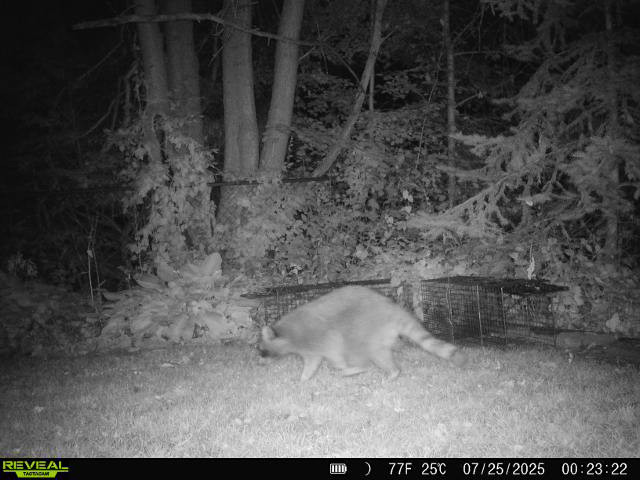
This year I had vague notions of hiring a contractor or handyman to do a little work on the back deck, and I think it’s high time we updated our living room furniture. What I’ve ended up doing instead, however, is first attempting to get our lawn care folks to remove some ivy (they would not, for there is some poison ivy in there, and half the crew is desperately allergic), then hiring a student (strongly resistant to poison ivy per his mother) to tackle the job for us, and then noticing some raccoon scat in the backyard while outside to hand off a bottle of Gatorade. The especially bad news for us is that our wildlife control guy retired and handed off his business to another company, and they do not have a person licensed to remove critters in our area. They did have a referral to offer, however, so I gave him a holler, and we’re in the process of trying to send our raccoon friend away.

This critter, however, has been raccooning for awhile, and we might need a bigger trap. Just look at this guy:

The new wildlife control folks differ philosophically from the older guy. He was pretty surgical in his planning, laying out bait raccoons (and only raccoons–he trapped nothing else) love in their travel lanes and landing them one at a time. The new guy set seven traps out and has a per-critter rate, which is typical of the big companies in the area. So far we’ve caught one raccoon, two opossums, and a groundhog; the big feller still roams free. So the cost keeps ticking up, though we know the guy we’re after is on the loose.

The tricksy bit here is that it’s not too tricksy. I can afford the new guy’s rates with little discomfort, and I’ve got enough salted away to cover a bunch of other Unexpected Expensesā„¢ if necessary. But I worry, and I’m very skilled at worrying.

One of the perils of being me is that I grew up with precarity, that state of perpetual economic uncertainty plenty of folks know. My father died when I was twelve, and he left a bunch of medical expenses behind. And thanks to some bureaucratic legerdemain, some benefits that were paid out upon his death were later chased down by bureaucrats, who are, as most folks know, always evildoers. (As a writing #protip, the easiest way to identify evildoers is to kill them in fiction; in virtually all cases the bureaucrat is a free space on the bingo card–you can toss them in a wood chipper and readers won’t care. That’s a persistent pattern even in a world in which folks can be a little skittish about offending anyone.) My mom was a Hero of Home Economics, who managed to feed herself and two oversized teenage boys on one income. But back in the day there was a discernible pattern: she got paid on Thursdays and did the grocery shopping on Thursday nights, which meant the cupboards were fairly bare on Tuesdays. One of my mom’s few faults was the Storm-Offā„¢, which she rarely resorted to but which amplified my sense of how dicey life can be. She usually just needed an hour on the road to clear her head, but of course when you’re not all that worldly (and I’ve never been an especially worldly entity) it feels a lot like being utterly abandoned for cause. And if you’re properly maladjusted, you learn to shoulder your share for those episodes. If my mom had driven off and ditched us, I think most folks would have been pretty sympathetic.

So what happens? In response to precarity, you first get The Worry, then you get the Reaction Formation. “All is well!” insists the Bald Man–and in truth, it is–but he does not feel at all that all is well. The trick, he tends to believe, is that it shouldn’t show. He becomes a little thriftier, but in a decidedly low-key way; he will not skimp on any of the household necessaries, nor will he kvetch when the power bill triples, but he will not splurge on stuff he might like for his own amusement–just in case.

The catch that comes with the precarity pattern is that I know it, and know it very well. I know how little is affected by my day-to-day expenses, and how quickly I can recover from modest missteps or unexpected expenses. Even so, my wiring from past experience tells me that a little panic might be worthwhile, so my stress mechanisms kick into high gear.

The diagnosis of my vasovagal syncope has made me a little more mindful about stress management, but this is one of those sticking points I can’t quite work past. And while I’m reasonably confident that my boo is not going to storm off from any perceived stinginess on my part, I remain, alas, very skilled at worrying.

The Mind Is the Life

Lately I’ve been reading up on vasovagal syncope, largely in response to either a) a bad take by a cardiologist or b) a bad bit of listening by a patient. In essence, a feller came away from a cardiology appointment at which his doc told him VVS is perfectly normal and nothing to worry about. As a guy who just dropped his very kind but not very helpful primary care physician, I suspect I know how that miscommunication went down.

At bottom, VVS is pretty common, and it’s also self-correcting; the faint-and-fall outcome is the body’s way of getting more blood to the noggin. My guess is that the feller heard his doc but misunderstood.

The tricksy bit of business with VVS, which I was diagnosed with earlier this year, is that it is the body behaves more or less as it should: the vagus nerve responds to some stressful stimulus (via the sympathetic nervous system) by overreacting (via the parasympathetic nervous system) and flooding the body with the chemicals it needs to calm down. It overshoots the mark, alas, which yields a hard drop in blood pressure and, in many cases, a drop to the floor. The test they perform to confirm the diagnosis is called the tilt-table test, which is more or less what it sounds like. They let you relax for a spell, then strap you to a table and tilt the body slightly past vertical, so it would fall over were it not for the straps. In my case it yielded a brief fainting spell when my blood pressure dropped down to 2 mm Hg.

The tough part for me is that I tend to associate stressful discomfort with growth, which obliges me to be as granular as I can be. The spells of VVS I recall very well have a predictable course: I get tunnel vision, which often yields to a feeling of lightheadedness; then I flush very warm for a bit, and then I’ll drop if I haven’t taken any measures to avoid doing so. Most of the disasters folks report seem to happen while they are still figuring out what’s going on. I took a couple falls in the early going, which yielded a dinged-up elbow and a bit of analytic paranoia.

I’m now in an era of active meta-analysis, which is not the fun-fest they make it out to be in the brochures. It means I’m now spending a lot of time reassessing the stuff that gets me worked up. I might have mentioned before that I’m not a big fan of grocery shopping, for instance, though I do most of the shopping here at the Abbey. Back before Target decided to consign itself to the scrap heap, I would shop at the local store right when it opened around 8:00 on Tuesday. That meant that I was in and out in 30 minutes or so, since the aisles were empty. These days I shop at our local Meijer at around eleven o’clock on Tuesdays, and it tends to hit a bunch of little stress triggers that add up. The building is a little warmish, and the aisles are full of folks with a nominal understanding of spatial relations. I can almost feel the stress building up if I don’t talk myself down and pay attention to the fact that my eyes are scanning as they should. I usually calm down when I realize that no tunnel vision is happening, though I might feel too warm and a little honked off.

Granularity seems to be the key, especially since VVS is neurocardiogenic. The tough part for me, at the level of meta-analysis, is that I have a tendency to expose myself to discomfort on purpose in order to move my own existential goalposts. As the Meijer example might imply, I find certain kind of social engagement stressful. I don’t like having to engage with anyone at the grocery store to begin with, so the fact that I often need to say “Excuse me” so I can get by some jackass who has blocked an aisle with his cart is a significant annoyance to me. I’m learning to monitor/process it better, but it usually means wading into unpleasant environments with plenty of triggering stressors when I’m already a little worn down. I rather suspect my cortisol levels are through the roof most of the time, so on a day like today, when my visit to the gym was curiously complicated by folks devoid of situational awareness (the ROTC guy who decided to do planks and completely obstruct one of the major thoroughfares, for instance, or the kid in the Dragonball Z shirt who decided to station himself right in front of the water fountain as he fiddled with his phone), I have to remember that it’s a me issue but also a real thing with real effects.

It helps that I’m a teacher who came to terms long ago with the understanding that learning is, alas, a major source of discomfort. Admitting that I suck at something, or that I’m an ignorant baboon, is never easy. But ambling headfirst into the stress mines is something I can still manage, and I learn a little more about my system tolerances every time out.

Work/Progress

I’m still doing my best to practice optimism, though the world is going out of its way to make optimism difficult these days. Progress on Chancers proceeds apace, however, and I thought I’d hang out the chapter on player safety for folks to take a look at. I’ve got a monstrous amount of prose drafted, so this post will serve as a prose sample and do double duty for me, allowing prospective players to see where I’m headed. I can also mix in links here, so folks can find their way to some digital resources and to the launch page itself.

Here be the working draft of Chapter Two, any which way:


On Safety in Chancers

Before you tuck into your first session of Chancers, it’s a good idea to have a discussion about safety for both players and the GM in your gaming group. Happily, there many highly-regarded safety tools out there in the world of gaming these days, and if your group has already found a set that works well for you, don’t hesitate to apply it to Chancers. (Bloggery note–a goodly set can be found over here.)

I’ll speak candidly as Bill Wandless, longtime gamer, for a few paragraphs to lay some cards on the table. I’m not as conversant with the modern safety tools in circulation as I could be, largely because I’ve had the great good fortune to play with the same group of friends since about 2017. One of the group’s regular GMs was kind enough to invite me to take part in his RuneQuest campaign back in the day, and that invitation was seconded by players already in the group. Over time we’ve had the chance to try on many games and iron out many of the wrinkles in our interpersonal gaming dynamics, and those adjustments have all been made amicably, given our collective intent to do right by our friends.

Three other things are worth knowing about me, at least in terms of player safety. The first is that my day job involves teaching. As a result, I’m steeped in the idea of best practices, even if the notion often feels elusive at an academic institution. If there are strategies for doing better—for making people feel more welcome and more willing to engage with an experience—I’m on board. Most classes I teach involve diverse groups of 20-35 writers, so establishing a preserve for creativity and self-expression is vital. It’s tough to take risks of any kind if you don’t feel safe doing so. No one wants to be teased or laughed at for verbalizing aspects of their identities, convictions, thoughts, or values, and gaming deals with such acts of self-articulation regularly.

The second thing, oddly enough, is that I’m a hypnotist, a sidelong extension of my work with language. There are two vivid takeaways at the place where hypnosis and gaming meet. The big one is that imaginative experience is profound. The same capacities that allow us to get lost for hours in role-playing escapades also leave us vulnerable to tensions that can arise when our in-game personae encounter forms of victimization or harassment we might know from lived experience. (And I take for granted that experience is wildly various, that my own frames of reference can’t fully equip me to conceive of what anyone else has been or could be going through.) The second is that these effects register on the body, bearing on heart rate, blood pressure, the release of neurochemicals, and several other autonomic processes. I’ve seen a great deal of online chatter dismissive of the need for safety tools in role-playing games, hinting that they speak to some failure to distinguish between real life and the realm of imaginative play. When I conceive of safety at the gaming table, however, I think about actual hurt and harm, about how what happens in the mind can work on the body in unwelcome ways.

The third and final thing is the integrity of the fiction, an idea that appears in the section on ā€œGM Best Practicesā€ in John Harper’s excellent Blades in the Dark and which I dwell on often when I work on worldbuilding. You and your players have a vast array of games to choose from, so there must be something about Chancers that appeals to you in prospect. Given how I’ve promoted the project, I’ve got some suspicions about what that something must be. When we play Blades, for instance, we plug into the history, culture, and vibe of Doskvol; we adapt to the locale and abide by the operant conditions within those lightning barriers. When I write on the Rainy City game setting for Superhero Necromancer Press, I go in knowing the rain is a feature, not a glitch, that what’s wondrous and fun about that world arises from embracing the rain as a constant. In Chancers I proceeded in a similar way, keeping broadmindedness, inclusivity, and humanity in focus from the very beginning—both to help players determine how they might inhabit the Drifting Kingdoms and to help GMs craft exciting adventures arising from a coordinated set of fictional commitments.

*                      *                      *

When you start up a Chancers campaign, consider beginning with a Session Zero, an open session in which the players can introduce themselves to one another while trying on the roles they intend to play and the GM can set the scene in Euphyria. Session Zero thinking is cooked into ā€œThe First Chance,ā€ the introductory adventure presented in Chapter XX, which can be expanded to help everyone at the table feel at ease. Such sessions can serve as vital opportunities to lay down ground rules concerning thorny subjects, especially those areas that people at the table personally find disquieting. Also be sure to let players know they can draw attention to any in-game distress they experience without fear of judgment. That is a critical premise to get out on the table openly and early.

Chancers is flexible enough to accommodate just about any content exclusions, boundaries, and tonal choices your group settles on. Most games wisely set aside child abuse, animal cruelty, and sexualized violence altogether, and many games acknowledge problematic social practices indirectly or subtly, reminding players that they exist in the game cultures without dwelling on them. Conversational consent—talking things through and agreeing on the right terms of engagement—will help your group dial in the details.

As a broad content warning, however, it’s well worth acknowledging that Chancers deals with cultural bias. The word ā€œChancerā€ itself echoes with this prejudice. At bottom the word refers only to someone who takes chances and assumes things will work out. In modern British English, however, it’s taken on a few negative connotations and associations. In the Drifting Kingdoms, usage of the word partly captures the fact that early uses of Chancing magic were alarmingly unpredictable, which led observers to associate good results with dumb luck. Players will begin their adventures in a far more enlightened time, but some hints of those outdated attitudes might occasionally surface.

Those attitudes, however, have little traction in the societies of the Kingdom. They have been challenged and scuttled in most every dimension of culture. In terms of player safety and solace, GMs might find it beneficial to highlight the constructive dimensions of culture on the islands rather than emphasizing those glimpses of intolerance. ā€œThe First Chanceā€ adventure captures the typical tenor of the game setting, which emphasizes mutual regard, community, and the belief that good things might be made even better. In the two days prior to the Muster, when the PCs will be formally installed in the social structures of Euphyria, they are sure to see folks of every human race and ethnicity and a host of the ogres, orcs, goblins, gnomes, elves, and more exotic humanoids one would hope to find in a fantastical setting. They’ll encounter citizens of many different body types and capabilities. They’ll also see a wide variety of gender expressions and relationships of all kinds, as well as the prevailing attitude that this state of affairs is what the Kingdoms themselves want—a notion that extends to the emergence and reception of Chancers, too. Beyond simple tolerance, the PCs will find wholehearted acceptance of all kinds of lifeways.

At the end of a session, especially if it coincides with the end of an expedition or similar foray, some safety guides recommend taking time for a debriefing.Ā  That’s solid advice, especially if the group grappled with sensitive subject matter. In most cases, however, I think it can be more beneficial to affirm what everyone at the table thinks went well in the latest stretch of the game. If time permits, the session can profitably segue into an Interlude, which assumes life goes on in the Kingdoms even though gaming at the table has paused. The plans the Chancers have in mind—intelligence they would like to gather, for example, or the things they would like to build, or the connections they would like to forge—can often be set in motion in brief exchanges that give the GM help with their game preparation and the players encounters to look forward to. Experience and Reputation awards can be handled during these junctures as well, and Reputation will be an excellent guide for GMs, allowing them to sow adventure seeds for the future.

Whether the group decides to formalize regular debriefings or not, it’s wise to keep lines of communication open between sessions. GMs can also make themselves accessible in the event issues arose, especially if the issues concerned matters of tone or problematic content. Most players will recognize when they’ve made interactive missteps, but the GM might from time to time opt to help players appreciate moments when they unwittingly gave offense. The GM should not be expected to serve as the arbiter of disputes, nor should they be asked to police behavior personally; their primary responsibility is to support the integrity of the fiction, which will account for what the PCs altered in the Kingdoms and set the stage for the next batch of happenings.

Player safety will typically involve the regular revision and refreshment of conversational consent, as the dynamic of the group evolves and as new considerations make their way onto the table. Latching on to the ethos of Chancers, however, should help everyone get a feel for the best approaches to engaging with the fiction before long.

The Discipline Dilemma

In prospect, this sounds like it might be a terribly sexy post. I regret to inform you, alas, that this will actually involve a bit of my conventional noodling and navel-gazing, though I hope the result is of some value.

As I’ve surely established by now, I have a deep and abiding fetish for metacognition. I love me some thinking about thinking. Today, at least, I’m thinking about generative, positive, and even optimistic thinking, which is not my usual wheelhouse.

Long ago I remarked on the comfort I take in focusing my thought and behavior on what actually falls to me, personally, as a critter. I think about that ethos quite a bit at the end of a semester, since I will spend several days reaching out to and awaiting response from students who need a little nudge to remember something they’ve forgotten. Most of the time I dread The Day After, since that’s often the day when those students finally open up their email or else realize (with their final grades in hand) that they could have changed outcomes to some extent. It’s a sort of worry I’m prone to, though it does me no good. I try not to think of myself as a worrier, but by golly, I’m one of those worriers.

Worry, as it turns out, is a pretty simple imaginative expedition. Because I have a fair amount of experience with stuff going badly in the past, it’s not too tough to imagine other things might go the same way. It’s thought on easy mode, though it’s not easy on the old noggin. It doesn’t require much self-discipline to lapse into a default mode when doing otherwise requires energy and what can be a significant expenditure of cognitive energy.

I am pleased to report, however, that it’s possible. It just requires a lot of revision, both the American and British senses of the word.

For example, early this year I fainted and took a spill. As with most such occurrences, I was bewildered and really didn’t know what had happened. I wound up with a smashed toe and a respectable bonk on the head, and a subsequent visit to my primary-care doctor concluded that a smashening and a bonkening were about the extent of it. He sent me in for some blood work as well, though it turned up nothing actionable. The good/bad follow-up news is that I had a full-blown episode of syncope (which is the fancy name I prefer) a month later, sitting down and playing a Rainy City game on Friday night with my friends.

It’s super-easy to focus on the mediocrity of my doctor, the crunchiness of my toe, the cavalcade of tests that annoyed me for all of March and April, etc. It’s harder but wiser to accentuate the positive instead, which requires a more significant reconfiguration of my habits of mind. For example, the two episodes yielded relatively injury, which tends to be the most significant side effect of the whole business. Better still, the process of diagnosis yielded a benign outcome and an excellent new cardiologist. I went into my follow-up meeting with him to analyze my test results, though they seemed to me conclusive, and he sent me back into the wild with solid recommendations and answers to all my questions about managing the whole deal.

The trick is to recall that mode of conceiving of things and to persist in it, to keep redirecting my noggin whenever is starts heading down Dejection Street. With the new cardiologist’s advice in my pocket I returned to the gym this week, for example, and I was disheartened for a bit by the retirement of the old stair climber I’ve used most every summer. I freely concede it was old and due to be sent to the auction block, but it was still a bit of a letdown. But I can still go to the gym without restriction–save to be mindful of all the run-up symptoms that prefigure a spill. I normally focus on losing weight over the summer, but I can always work on building muscle instead. And I’ve got a pretty open summer in which to work it all out, with exercise in the morning and writing in the afternoons. It’s an enviable schedule, though my mind is natively wired to think about how much printing and shipping hard copies of Chancers is going to cost, about how I’m going to fill in the last few blanks I’ve got in the artwork column, etc. When my brain sets out in those directions, it generally takes an act of will to turn down a side corridor or to turn entirely around.

I think it’s something of a byproduct of our doomscrolling debauchery, since its easy to get caught up in the latest revolution in sociopolitical strangeness and dwell on it all the livelong day. But going against the grain of that tendency can feel a lot like optimism. A good example occurred last evening, when a scene in a show I was watching put me in mind of some new sociopolitical thing I’d encountered earlier in the day. Rather than revisiting it and fretting about it, however, I instead asked myself why I ought to bother and then spent fifteen minutes or so challenging my own penchant for such nonsense. I’m plenty informed, so the need to gather more info about some troublesome subject is small, and in a rare turn I managed to talk myself out of a deep dive into arbitrary woe. I won’t say I’ve logged enough practice to do it on a regular basis, but I can say I’m getting into the habit of practicing. And that, when you’re as well-versed in the ways of woe as I generally am, is a heckuva thing to carry into the summer months.

A 5/17 addendum:

A decent case in point: a storm rolled through late on the 15th, and we lost electricity in our neighborhood thanks to a power line downed by a fallen tree. When all is said and done we probably tossed out about $250 in groceries this morning. But they’ll be easy enough to replace, none of the trees I fret about fell, the outage aftermath chanced to fall on a day that was mild, weatherwise, and most of the perplexities we faced took about an hour to remedy. I am in point of fact terribly stressed by disruption, but it’s easy enough to round the corner from such episodes when you look at them rightly.

Trials, Errors

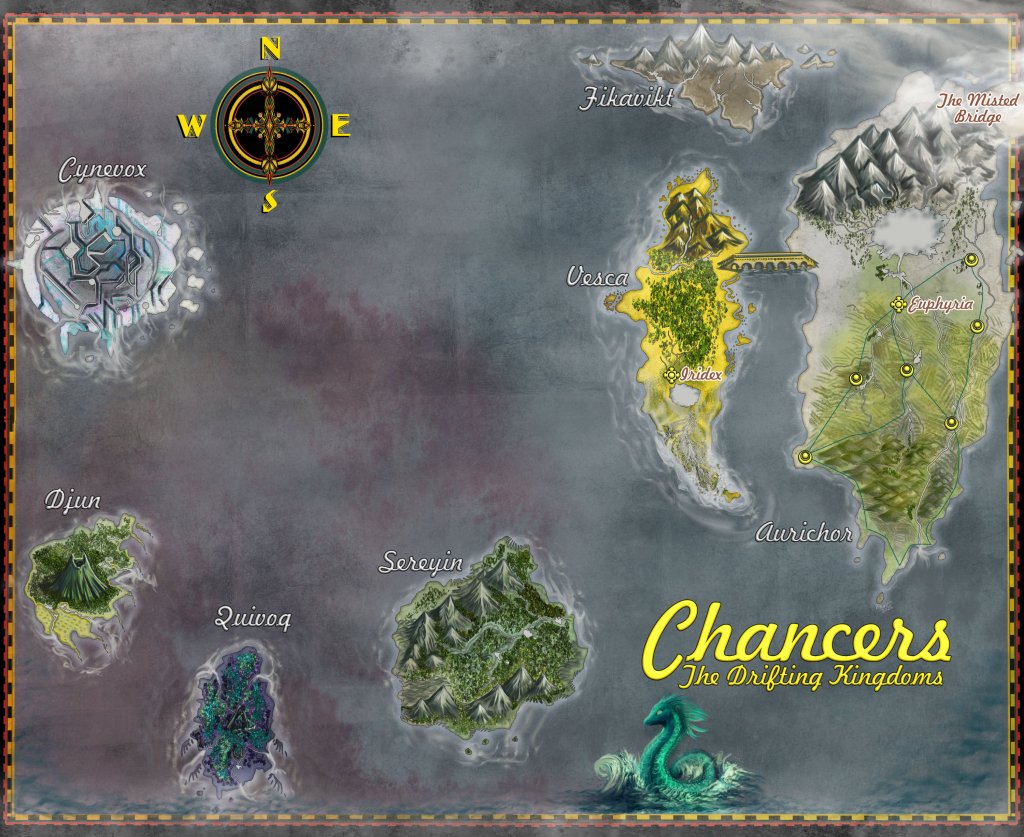
Before I dig in, let’s take a look at this beauty:

That be the map for Chancers (by the patient and kindly Ti Munro over at Feed the Multiverse), which is still slated for a crowdfunding launch this summer. If you’d like to hop on this train, your ticket to ride is right over here.

While I’m here, let me remind you that learning is terrible. Having learned is fantastic, and makes one feel like some sort of wizard, but the process is all about confronting discomfort, ignorance, and difference and coming out the better for it. Which is at least tricksy and is often brutal. It is, of course, critically necessary stuff, and often unavoidable. And in many cases it takes a few extra errors to determine that something was not, in fact, originally an error.

Lately, for instance, I’ve been revising a novella. More news on that before long. While I hope to turn the revision around quickly and get it back into the hands of a publisher, I had to wrangle with a snag: an early reader felt that my protagonist took a little too long to get on with the business of telling their story, as he lays out the causes of his reluctance to do the telling exhaustively. It took me about four variations on condensation to determine that the original hemming and hawing was probably just the right amount. He’s presented as an inexperienced storyteller dealing with slippery personal stuff, so it seems fitting to me that he’s going to dawdle a little before getting underway. I also happen to think his dawdling is engaging, and it speaks a great deal to the place he’s writing from. So in the midst of all my concessions to the wisdom of that early reader, I have tried to explain why I stuck to my guns.

I am, as it turns out, exceedingly sensitive to wasting time. When I write out hypnosis scripts, for instance, I am terribly reluctant to commit all the preliminaries to print, even though they’re critical. The needfuls generally come in during my last drafts. But I should also acknowledge my intolerance for reading and/or watching too much of a bad thing. Even after all these years I can’t handle Miss Bates in Emma all that well (the overly talkative character with little to say will always be one of my bĆŖtes noire), and while screening The Residence this past week I bristled at The Drunk Who Keeps Changing Their Story, a comedic type that belongs to the roster of liars in most detective fiction but is always hard to read or watch. Detective fiction presupposes some level of competence in the culprit most of the time, so when a story establishes that a character was discernibly drunk for most of the night when the crime went down, it’s hard to take the candidacy of that problem type seriously.

So part of me feels like I spent more time than necessary on those trial revisions, but at day’s end having a bit of evidence to suggest my narrator’s dawdling was sufficient but not excessive is a valuable thing. And the more mature parts of my brain understand that efforts to minimize errors of excess in the first draft tends to bog down the writing process and makes the prose much stiffer. That stiffness, too, is remediable, but it’s a hindrance in the first draft that also requires extra time spent in revision, a lose-lose proposition.

That’s where we’re at today, at any rate. With luck I’ll be able to put another chapter in the Completed Drafts folder for Chancers today, so it’s time to point my forehead in that direction before the deluge of grading arrives to end the spring semester.

The Feast of Feeling

One commonality at the bottom of most hegemonic structures is a love of monotony. Folks who hunger for certain forms of normativity also seem to hanker for sameness–so long as it’s the sort of uniformity that suits their existing tastes. Growth (intellectual, emotional, spiritual, and otherwise), alas, only emerges in contexts of richness and complexity. It’s the challenge, the friction, the tension that prompts us to examine our thoughts, feelings, and beliefs.

I’m not going to dwell on politics on this fine Sunday morning, though it might seem as if I’m trending in that direction. What’s caught my attention these days instead are two shows I’ve been binging with my fiancee: one called Alan Cummings’ Paradise Homes and another called The Restoration Man. The premise of the former is simple: Alan Cummings roams around the globe, visiting folks who think they’ve landed on their version of paradise, at least in architectural terms. And the latter is equally straightforward: a feller by the name of George Clarke visits with folks who have acquired listed (read: historic) properties in Great Britain and chronicles their efforts to turn these distinctive choices into livable homes.

The palette of Paradise Homes is not expansive–one gets the feeling, based on both geography and luxury, that paradise, at least in earthly terms, costs a bundle. What’s delightful about the show, however, is the host’s receptivity to the vagaries of experience. Cummings is a showman, first and foremost, and he’s at his merriest when he’s allowed to poke around these domestic spaces unattended. In some private moments, however, the viewer is allowed to see him wrestling with the choices the homeowners have made, many of which don’t agree with his sensibilities. He can ooh and aah at a gorgeous view with the best of them, but I enjoy watching him most when he’s faced with the minimalism of a couple that purchased a French chateau or built a big, boxy house with great views in the middle of nowhere. It feels to me like the showrunners are sending him in blind, more often than not, and while he can’t personally come around to the aesthetics he meets with, he has enough natural empathy and sensitivity to appreciate that these slices of paradise are just right for the folks who inhabit them. In some ways that feels like an enormous concession, especially in our current historical moment, when so many folks are invested in trying to order the world around their own short-sighted sensibilities.

The Restoration Man has a much broader emotional and ethical range, I’d say, perhaps because the episodes unfold over months or even years. Clarke is an affable host, and he adapts to situations as he finds them, with a wide variety of humane skills and approaches. His abilities are most vividly on display in the second and third episode, as he engages with a) a couple that spent their life savings on a church they hoped to renovate (a hope that could be utterly upended by any number of considerations) and b) a couple that bought a windmill they hope will become a home in which the wife, stricken with cancer, can convalesce.

The former finds George bewildered, as the husband of the couple, Gareth, with virtually no building experience, tries to achieve the dream while his wife cares for their kids and takes on two jobs. It’s a high-risk proposition, as the couple spent their entire nest egg on a property that (if bodies are actually buried underneath it) might not be amenable to any kind of renovation whatsoever. As their story unfolds, George has to watch as the reckless, seemingly clueless Gareth tries to renovate on the cheap, an effort that nearly costs him his marriage along the way as his exasperated, overworked wife becomes more and more isolated. He’s often bemused, but he’s always supportive, and when Gareth manages to pull the rabbit out of the hat and arrives at a solid approximation of the family dream, George is effusive in his praise.

The latter episode is considerably more taxing, as an experienced builder is faced with a renovation of a property with a curious architectural footprint and a number of situational challenges. The builder, Clive, hopes to finish the renovation as quickly as possible, but as the episode unfolds we learn he’s fighting a losing battle–his wife, Jane, suffers several reversals over the course of her treatment, and Clive spends an equal amount of time on the reno site and at home, seeing to her care and well-being. I won’t spoil the episode for you, but I will note that it ends in tears, both for Clive and for George as well, who cannot help but sympathize with a man who so earnestly and wholeheartedly pursued a dream with someone else in mind. Taken together, the two episodes reveal a wide range of responses, with George exasperated and at times troubled by Gareth and more soulfully invested in Clive’s quest.

On the whole it’s a curiously rich diversion, with a wide range of human prospects, from the dogged builder who suffers a heart attack and gets back to work perhaps too quickly, to the dreamers who spent bundles on their properties and have been worn down by the effort to gain planning permission to renovate them (the low-key villains of the series are city planners and planning committees, who are exceedingly precious about these buildings that have been neglected for decades and are falling into ruin, who are content to set hurdle after hurdle before folks who are willing to sink tens of thousand of pounds into these restoration projects). Clarke is an altogether amiable host, though it took me a little time to warm to him. In the early going he’s seemingly focused on preserving the architectural souls of these historic homes, but by the end of his encounter with Clive seems equally intent on seeing to the welfare of the intrepid homeowners.

In a world that’s currently developing programs to determine if a given reader will like a new book based on its similarity to books they’ve already enjoyed, seeing two worldly and capable gents encounter and come to terms with life in all its involved, chaotic, and even nonsensical messiness is invigorating. It’s reassuring to see sophisticated, experienced folks sift through their thoughts, feelings, and beliefs intelligently, candidly, and circumspectly and concede to the realities of these situations rather than fixate on the expectations and ambitions they’d like to impose upon them. We’re still eagerly awaiting the return of the Juniors Edition of the Great British Baking Show, but this is heartening human fare in the interim.

The Art of Failing

Astute, even obsessive readers might realize that yesterday’s post has vanished altogether, that my musings of a dreary Thursday afternoon have been lost to the aether.

Let me be candid, friends: said musings sucked, and were largely inspired by my wish to be out of the living room and in the office, as my boo was dealing with the onset of a migraine that she thought she could avoid with a little quiet, darkness, and solitude.

There was the germ of an interesting takeaway in that post–that it’s not unwise to plan for the prospect of success now and then–but it was mired in the cobwebbery of less pointed noodling. Let us think now of a web made of noodles and move on.

One of the great gifts that comes with something like maturity is the ability to recognize when something hasn’t worked, isn’t working, or will not work. The turning of the year is a decent time to think about such matters meta-existentially, but yesterday’s writing made for a respectable specimen of a Modest Mistake.

What does one do with a Modest Mistake? In this case, deletion seemed like an ideal option. One of the perils of the modern era is the tendency to double down, to commit to errors more vehemently instead of owning up to them, dealing with them, and moving on. Doubling down is how more Major Mistakes are born in many cases.

It’s a good thing to think about as I prepare to make space for a few new shirts in my dresser and decide what I want to do with some fiction currently in circulation. Half of the Art of Failure is Letting Go, which is one of the harder things we have to do in this life. The other Half is Being Honest, which is generally a little bit harder.

In the case of the dresser, it will be a minor thing. There are tee shirts I have not worn in all of 2024, and which might in fact not even fit any longer. Weeding through them should be easy, all matters of nostalgic attachment notwithstanding. I’ll need to weed through my Fiction Submission Tracking File, too, however, which will involve a little more existential investment.

In one case, for instance, I must face the terror of Follow-Up Messages, which will oblige me to pester a couple of publishers who have held on to manuscripts for a good, long time. It’s a tricksy epistolary genre, as one tends to be about 15% politely inquiring and 85% apologetic, but it can be a needful one in terms of planning for the future.

The more fraught element of Tracking File spelunking is deciding which stories need to be rewritten and which ones might need to be retired. One story, for instance, was written specifically for an anthology focused on clowns, and the editor kindly wrote to inform me that they’d already accepted a similar story for that collection. That’s one I can file away and tinker with over time. Another story of mine called “Leavings” has a zesty cosmic horror premise, so I’ll need to stow away the idea and mull over ways I might execute it better. And a couple stories have been rejected a dozen times apiece for reasons unknown. That’s not an especially high number in the realm of writing, but it’s one that gives a critter cause for pause.

With writing, happily, one can always delete or revise. Sunk costs tend to bedevil most writers, and it’s tough to know when to give up when subjective matters of “fit” are on the table. I try not to make the same mistake too often, but Being Honest about the quality of one’s own writing involves fairly rare frames of mind. I’m not in that frame this very second, but I might be after I shower, or after I visit the grocery store.

And that’s how one attempts to remedy a bland, noodlesome blog post, at any rate. I also need to reach out to my BackerKit followers this weekend with a Chancers update as well, so let’s hope this confessional post has worked the tedium out of my system a bit.